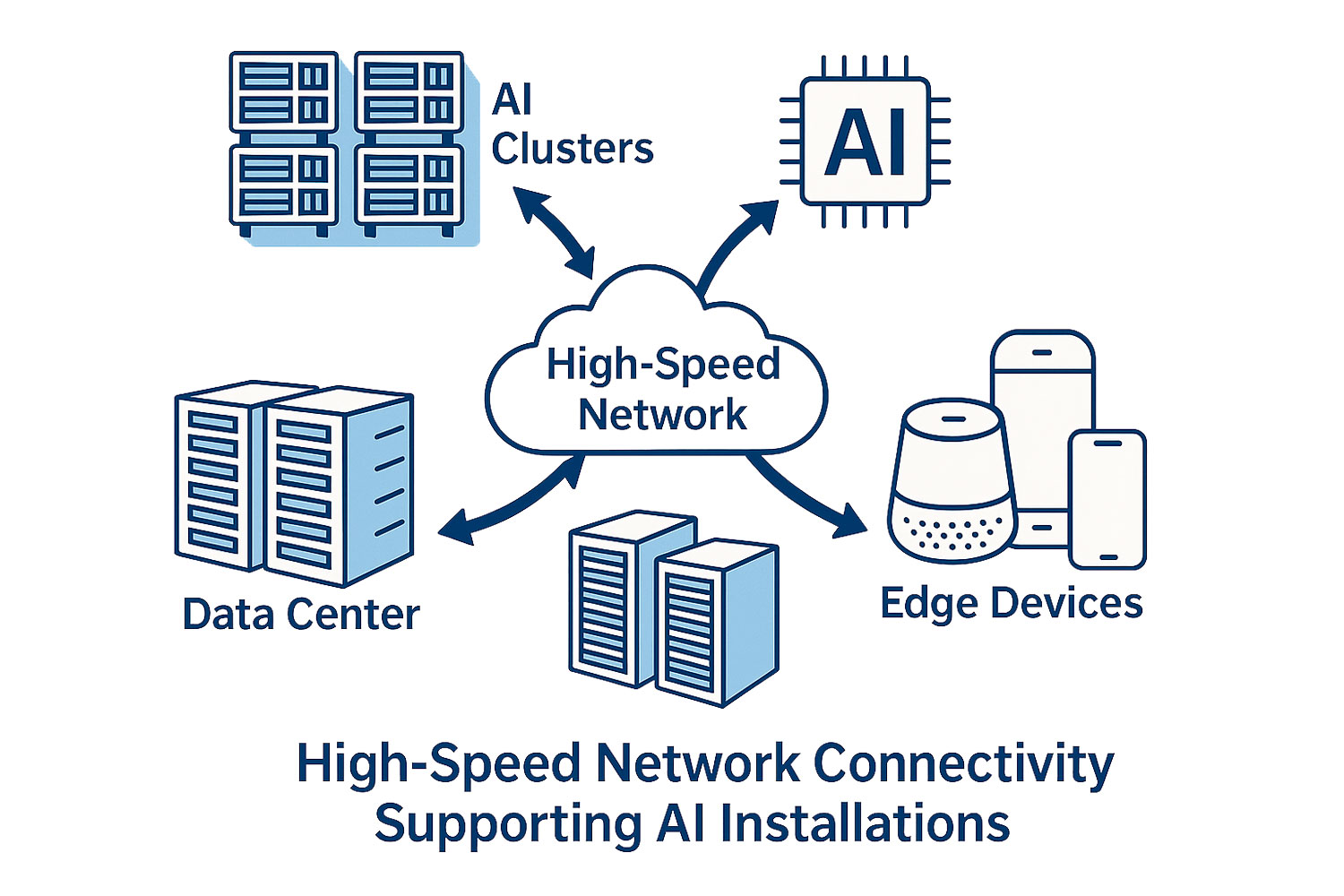
AI networking refers to the high-performance interconnects and network architectures that enable communication between GPUs, servers, storage systems, and edge environments.
Unlike traditional enterprise networking, AI networking must support:
Performance depends on how compute, storage, and networking operate together as a unified system. When networking becomes a bottleneck, even the most powerful GPUs and accelerators cannot operate at peak efficiency.
AI systems routinely process vast amounts of data, including high resolution images, video streams, sensor outputs, telemetry, and application logs. These datasets must move quickly and reliably across the infrastructure to keep workflows running smoothly.
High speed networking enables:
In short, the faster the network, the more efficiently data can flow, directly impacting training times, throughput, and overall productivity.
Modern AI workloads rarely run on a single machine. Instead, they rely on clusters of GPUs, TPUs, or other accelerators spread across multiple servers. These distributed systems must communicate constantly and at extremely high speeds.
High speed connectivity provides:
Without a high bandwidth, low latency network, distributed AI systems simply cannot operate effectively.
In industries where milliseconds matter - such as autonomous vehicles, industrial automation, IoT analytics, healthcare diagnostics, and financial trading - network performance directly affects outcomes.
High speed networking ensures:
For these applications, slow or unreliable connectivity is simply not an option.
AI deployments increasingly span hybrid environments, combining on premises infrastructure, cloud platforms, and edge devices. High speed connectivity is the glue that holds these ecosystems together.
It enables:
This level of integration is only possible with robust, high bandwidth networking.
AI models are growing exponentially in size and complexity, with many now containing billions - or even trillions - of parameters. As these models scale, so do the demands placed on the network.
To support next generation AI workloads, organisations increasingly rely on:
Without these technologies, scaling AI infrastructure becomes inefficient, costly, and ultimately unsustainable.
Broadberry delivers AI networking infrastructure as part of fully integrated AI, HPC and GPU-accelerated environments.

Capabilities include:
Broadberry works with customers to evaluate workload behaviour, scalability requirements, and performance goals to determine the most appropriate networking architecture for their environment.
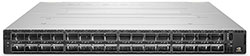
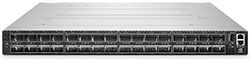
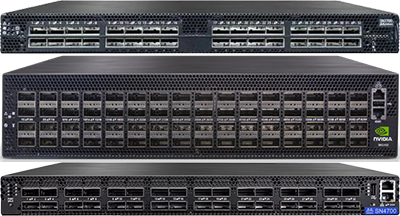
NVIDIA Spectrum-2 based 25GbE/100GbE 1U Open Ethernet switch with Cumulus Linux, 48 SFP28 ports and 12 QSFP28
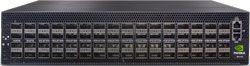
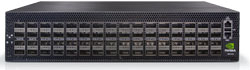
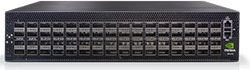
NVIDIA Spectrum-3 based 100GbE 2U Open Ethernet switch with Cumulus Linux, 64 QSFP28 ports, 2 Power Supplies (AC), x86 CPU, standard depth, C2P airflow, Rail Kit
NVIDIA Spectrum-3 based 100GbE 2U Open Ethernet switch with Cumulus Linux, 64 QSFP28 ports, 2 Power Supplies (AC), x86 CPU, standard depth, P2C airflow, Rail Kit
NVIDIA Quantum 2 based NDR InfiniBand Switch, 64 NDR ports, 32 OSFP ports, 2 Power Supplies (AC), Standard depth, Unmanaged, P2C airflow, Rail Kit
NVIDIA Quantum 2 based NDR InfiniBand Switch, 64 NDR ports, 32 OSFP ports, 2 Power Supplies (AC), Standard depth, Managed, C2P airflow, Rail Kit
NVIDIA Quantum 2 based NDR InfiniBand Switch, 64 NDR ports, 32 OSFP ports, 2 Power Supplies (AC), Standard depth, Managed, P2C airflow, Rail Kit
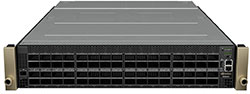
NVIDIA Spectrum-3 based 400GbE 1U Open Ethernet Switch with Cumulus Linux, 32 QSFPDD ports, 2 Power Supplies (AC), x86 CPU, standard depth, C2P airflow, Rail Kit
NVIDIA Spectrum-3 based 400GbE 1U Open Ethernet Switch with Cumulus Linux, 32 QSFPDD ports, 2 Power Supplies (AC), x86 CPU, standard depth, P2C airflow, Rail Kit
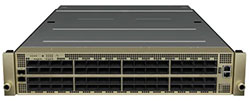
NVIDIA Spectrum-4 based 400GbE 2U Open Ethernet switch with Cumulus Linux Authentication, 64 QSFP56-DD ports and 2 SFP28 ports, 2 power supplies (AC), x86 CPU, Secure-boot, standard depth, Power-to-Connector airflow, Tool-less Rail Kit
NVIDIA Spectrum-4 based 400GbE 2U Open Ethernet switch with Cumulus Linux Authentication, 64 QSFP56-DD ports and 2 SFP28 ports, 2 power supplies (AC), x86 CPU, Secure-boot, standard depth, Connector-to-Power airflow, Tool-less Rail Kit
NVIDIA Spectrum-4 based 800GbE 2U Open Ethernet switch with Cumulus Linux Authentication, 64 OSFP ports and 1 SFP28 port, MGX Mount with Busbar, x86 CPU, Secure-boot, standard depth, Connector-to-Power Airflow, Tool-less Rail Kit
NVIDIA Spectrum-4 based 800GbE 2U Open Ethernet switch with Cumulus Linux Authentication, 64 OSFP ports and 2 SFP28 ports, 4 AC PSUs, Secure-boot, standard depth, Connector-to-Power Airflow, Tool-less Rail Kit
What is InfiniBand used for?
InfiniBand is commonly used in AI training and HPC environments that require ultra-low latency, high bandwidth, and fast communication between GPU clusters and compute nodes.
What networking is required for AI training?
AI training environments typically require high-bandwidth, low-latency networking capable of supporting distributed GPU communication, parallel processing, and fast data movement between compute and storage systems.
Can networking limit GPU performance?
Yes. Insufficient bandwidth or high network latency can leave GPUs waiting for data or communication between nodes, reducing overall training efficiency and system performance.
What is network latency?
Network latency refers to the time it takes for data to travel between systems or nodes. Low latency is critical for distributed AI workloads that rely on constant communication between GPUs and servers.
What is the difference between NVLink and InfiniBand?
NVLink is a high-speed GPU-to-GPU interconnect used within tightly coupled systems, while InfiniBand is a network fabric designed for communication across multiple servers and distributed AI clusters.
How much bandwidth does AI training require?
Bandwidth requirements depend on model size, dataset scale, and the number of GPUs involved. Large-scale AI training environments often require 100GbE, 200GbE, 400GbE, or InfiniBand networking.
When should AI networking scale out?
AI networking should scale out when GPU clusters, datasets, or distributed workloads grow beyond the capabilities of a single system or network fabric.
What is the role of networking in an AI factory?
Networking connects GPUs, storage, and compute resources across the AI factory, enabling high-speed data movement, distributed training, and efficient scaling of AI workloads.
Should AI networking run on Ethernet or InfiniBand?
The right choice depends on workload requirements, performance goals, scalability needs, and budget. InfiniBand is commonly used for large-scale AI training and HPC environments, while Ethernet is often used for more flexible or mixed infrastructure deployments.
Broadberry works with customers to evaluate these trade-offs and determine the most appropriate networking architecture for their AI environment.
Our Rigorous TestingBefore leaving our UK workshop, all Broadberry server and storage solutions undergo a rigorous 48 hour testing procedure. This, along with the high-quality industry leading components ensures all of our server and storage solutions meet the strictest quality guidelines demanded from us.
Un-Equaled FlexibilityOur main objective is to offer great value, high-quality server and storage solutions, we understand that every company has different requirements and as such are able to offer un-equaled flexibility in designing custom server and storage solutions to meet our clients' needs.
We have established ourselves as one of the biggest storage providers in the UK, and since 1989 supplied our server and storage solutions to the world's biggest brands. Our customers include: