What is an AI training server?
An AI training server is a system designed to build and optimise machine learning models using large datasets and high-performance compute resources.
What hardware is required for AI training?
AI training typically requires GPUs, high-speed interconnects, large memory capacity, and fast storage to support parallel processing and data throughput.
What is the difference between AI training and inference?
Training builds and optimises a model. Inference uses that model to generate predictions from new data.
AI training is the process of building a machine learning model by feeding it large datasets and adjusting its parameters over time.
Unlike inference, which runs a trained model, training is compute-intensive and requires coordinated processing across multiple GPUs and nodes. Performance depends on how efficiently data is processed and how quickly systems can iterate through training cycles.
Training is typically measured by:
AI training and AI inference serve different roles in the machine learning lifecycle and place different demands on infrastructure.
| AI Training | AI Inference | |
|---|---|---|
| Primary Purpose | Build and optimise models using large datasets | Run trained models to generate predictions |
| Core Process | Iterative computation and parameter tuning | Real-time or batch prediction from new data |
| Compute Requirements | Very high, often distributed across multiple GPUs | Moderate to high, depending on workload |
| Key Priorities | Parallel processing across multiple GPUs High-bandwidth interconnects Efficient data loading and preprocessing | Low latency High request throughput Consistent response times |
| Typical Environment | Training clusters, multi-node systems | Edge, on-premise, or cloud deployment |
| Performance Focus | Time to convergence and training efficiency | Response time and throughput |
Broadberry AI training servers are designed to accelerate model development, reduce training time, and support distributed AI training at scale.
Typical configurations include:
Systems are configured based on model size, dataset scale, and training architecture, including multi-GPU and multi-node training environments.
Broadberry GPU-dense platforms are optimised for leading AI frameworks such as PyTorch, TensorFlow, and JAX, and support the latest accelerators from NVIDIA and AMD.
Training performance is often limited by factors outside of raw compute.
Common bottlenecks include:
Optimising these areas improves training efficiency, reduces time to convergence, and maximises GPU utilisation. Well-designed systems ensure that GPUs remain fully utilised rather than waiting on data or communication delays.
These AI training servers are designed to support a range of AI training workloads, including:
Each workload places different demands on compute, memory, and data movement. System configurations are tailored accordingly to ensure efficient training at scale.
AI training servers are typically deployed by:
These systems are used in environments where compute performance, data control, and training efficiency are critical.
Broadberry works with organisations at different stages, from initial model development to large-scale AI training infrastructure.
| Stage | What Broadberry Enables | |||
|---|---|---|---|---|
| General Purpose | ||||
| Data Preparation | High capacity storage, fast ingest, scalable compute | |||
| Model Training | GPU dense servers, HPC clusters, high bandwidth networking | |||
| Hyperparameter Tuning | Distributed compute, automated scaling | |||
| Model Deployment | Edge appliances, inference servers | |||
| Monitoring & Optimisation | Enterprise grade reliability, remote management, long term support | |||

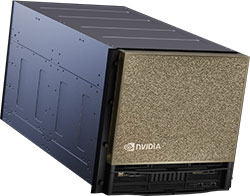
NVIDIA DGX Spark Founders Edition AI Supercomputer. Designed for a development, pre-production and concept that allows developers to test and fine tune AI Code / software stack prior to AI Production.
Dual Intel Xeon 6 Series processors, dual 10Gb/s LAN ports, redundant power supply, 8x 2.5" NVMe/SATA/SAS hot-swappable bays.
Single AMD EPYC 9005 / 9004 Series, Supports up to 4x FHFL PCIe Gen5 x16 slots - 4x 2.5" NVMe/SAS/SATA & 4x 2.5" SAS/SATA Drives.
Single AMD EPYC 9005 / 9004 Series, Supports up to 8x FHFL PCIe Gen5 x16 slots - 4x 2.5" NVMe/SAS/SATA & 4x 2.5" SAS/SATA Drives.
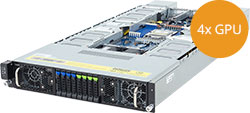
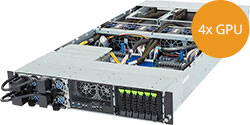
Short Depth Single AMD EPYC 9005 / 9004 Series Server with 4x GPU Slots, 2x 2.5" Gen4 NVMe Hot-Swappable bays
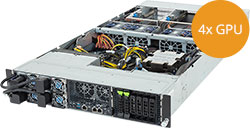
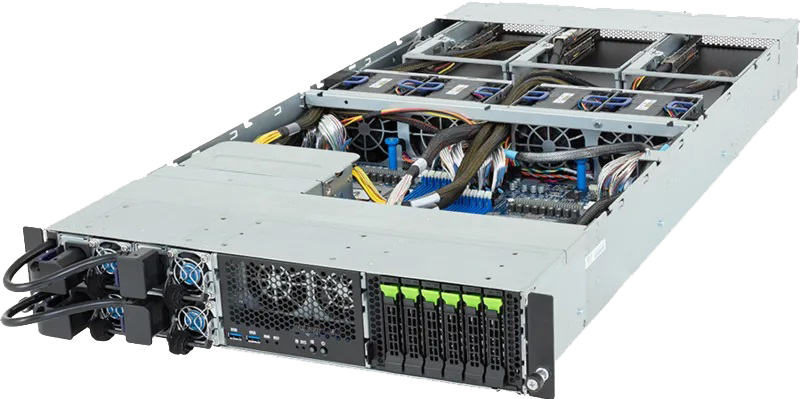
Short Depth Dual AMD EPYC 9005 / 9004 Series Server with 4x GPU Slots, 6x 2.5" Gen4 NVMe Hot-Swappable bays
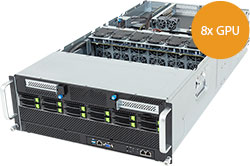
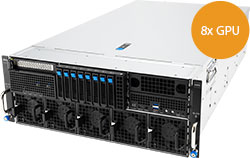
Dual Intel Xeon 6 Series processors, Supports 8x Dual slot Gen5 GPUs, dual 10Gb/s LAN ports, redundant power supply, 12x 2.5" NVMe/SATA/SAS & 4x SATA/SAS hot-swappable bays.
Dual AMD EPYC 9005 / 9004 Series, Supports up to 8x FHFL PCIe Gen5 x16 slots - 4x 2.5" NVMe/SATA/SAS & 4x SATA/SAS Drives.
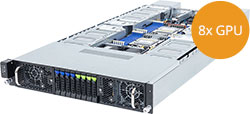
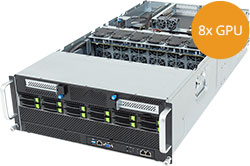
Dual AMD EPYC 9005 Series Server - Supports 8x Dual Slot GPU Accelerator Cards, 4x 2.5" NVMe & 2x SATA Hot Swap Drive Bays
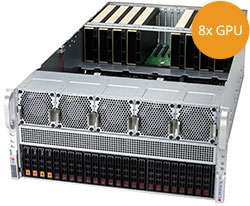
Dual AMD EPYC 9005 / 9004 Series 8x GPU Server - 4x 2.5" NVMe/SATA/SAS & 4x SATA/SAS
Dual AMD EPYC 9005 / 9004 Series 8x GPU Server - 12x 2.5" NVMe/SATA/SAS
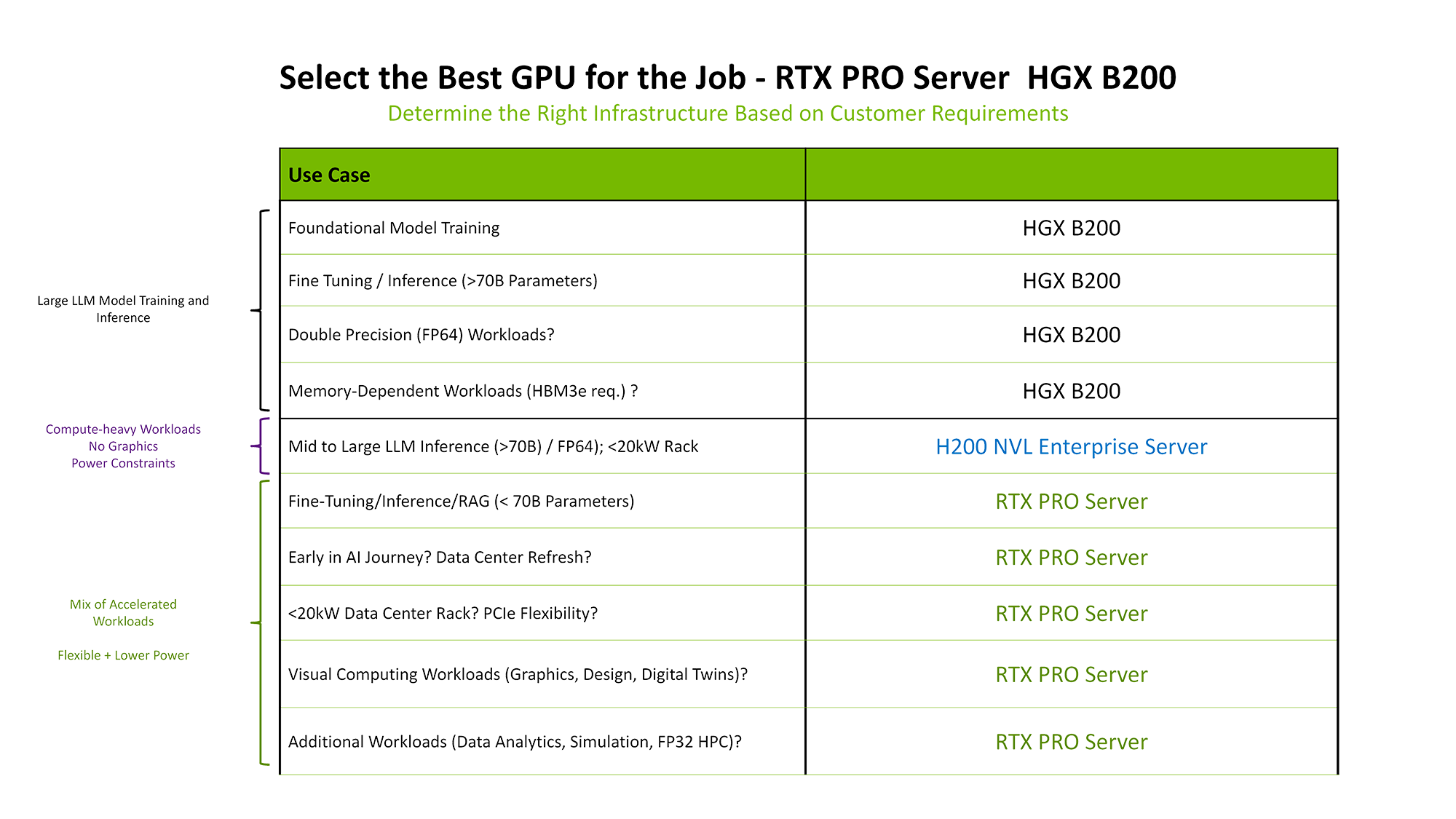
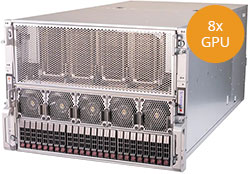
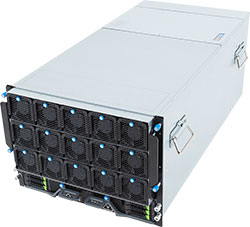
Supports 8x HGX H200 GPUs, dual 10Gb/s BASE-T LAN ports, redundant power supply, 16 x 2.5" NVMe, 8x SATA hot-swappable bays. Built for AI Training and Inferencing.
NVIDIA DGX H200 with 8x NVIDIA H200 141GB SXM5 GPU Server, Dual Intel® Xeon® Platinum Processors, 2TB DDR5 Memory, 2x 1.92TB NVMe M.2 & 8x 3.84TB NVMe SSDs.
CyberServe EPYC EP2-808S G6 with 8x NVIDIA HGX B300 GPUs, Dual Intel Xeon 6 Series Processors, DDR5 Memory, 2x M.2 slots & 8x NVMe Hot swap drive bays
NVIDIA DGX B200 with 8x NVIDIA Blackwell GPUs, Dual Intel® Xeon® Platinum 8570 Processors, 4TB DDR5 Memory, 2x 1.92TB NVMe M.2 & 8x 3.84TB NVMe SSDs.
NVIDIA DGX B300 with 8x NVIDIA Blackwell Ultra SXM GPUs, Dual Intel® Xeon® 6776P Processors, 2TB DDR5 Memory, 2x 1.92TB NVMe M.2 & 8x 3.84TB E1.S NVMe.
NVIDIA DGX GB200 with 72x NVIDIA Blackwell GPUs, Dual Intel® Xeon® Platinum Processors, 4TB DDR5 Memory, 2x 1.92TB NVMe M.2 & 8x 3.84TB NVMe SSDs.
What is an AI training server?
An AI training server is a system designed to build and optimize machine learning models using large datasets, GPUs, and high-performance compute infrastructure.
What is the difference between AI training and AI inference?
AI training builds and optimizes a model using data and iterative computation. AI inference uses that trained model to generate predictions from new data.
What hardware is required for AI training?
AI training typically requires GPUs, high-speed interconnects, large memory capacity, and fast storage to support parallel processing, distributed training, and data throughput.
How many GPUs do I need for AI training?
The number of GPUs depends on model size, dataset scale, and training time requirements. Larger models and faster training timelines require more GPUs and distributed training across multiple nodes.
What is distributed training?
Distributed training is the process of training a model across multiple GPUs or servers simultaneously. It reduces training time and allows larger models to be trained efficiently.
What is the role of GPU interconnects in training?
High-speed interconnects such as NVLink and InfiniBand allow GPUs to communicate efficiently. This reduces bottlenecks and improves training performance in multi-GPU systems.
How long does AI training take?
Training time varies based on model complexity, dataset size, and system configuration. It can range from hours to weeks depending on the workload.
What is time to convergence?
Time to convergence refers to how long it takes for a model to reach an acceptable level of accuracy during training. It is a key measure of training performance.
How important is storage performance for AI training?
Storage performance is critical. Fast storage such as NVMe ensures datasets can be loaded quickly, preventing GPUs from sitting idle.
How much memory is needed for AI training?
Memory requirements depend on model size and batch size. Large models require significant GPU memory and system RAM to operate efficiently.
What bottlenecks affect AI training performance?
Common bottlenecks include slow data loading, limited GPU memory, and inefficient communication between GPUs.
Should AI training run on-premise or in the cloud?
On-premise training offers more control over performance, cost, and data security. Cloud training provides flexibility and scalability. The choice depends on workload size, budget, and operational requirements.
When does it make sense to build a dedicated training cluster?
A dedicated training cluster is beneficial when workloads are large, ongoing, or require predictable performance and cost control.
Can AI training systems scale over time?
Yes. AI training infrastructure can scale by adding GPUs or additional nodes, allowing systems to grow with model and dataset requirements.
How do you size an AI training server?
Sizing depends on model architecture, dataset size, training framework, and performance goals. GPU count, memory, storage, and networking must all be balanced. Broadberry works with customers to evaluate these factors and recommend an appropriate AI training system architecture based on real workloads.
What frameworks are supported on AI training servers?
Broadberry AI training servers support frameworks such as PyTorch, TensorFlow, and JAX, allowing models to be developed and trained using standard tools.
What industries use AI training servers?
Industries include healthcare, financial services, manufacturing, research, media, and any environment requiring large-scale model development.
Broadberry Data Systems is trusted by enterprises, government agencies, research institutions, and cloud providers worldwide. Our AI training platforms are designed for long-term production AI environments where reliability, support, and lifecycle planning matter.
AI training servers are used across industries that require large-scale model development and data-intensive AI workloads, including:
Our Rigorous TestingBefore leaving our UK workshop, all Broadberry server and storage solutions undergo a rigorous 48 hour testing procedure. This, along with the high-quality industry leading components ensures all of our server and storage solutions meet the strictest quality guidelines demanded from us.
Un-Equaled FlexibilityOur main objective is to offer great value, high-quality server and storage solutions, we understand that every company has different requirements and as such are able to offer un-equaled flexibility in designing custom server and storage solutions to meet our clients' needs.
We have established ourselves as one of the biggest storage providers in the UK, and since 1989 supplied our server and storage solutions to the world's biggest brands. Our customers include: